Going Home
From The Hospital
Doesn't Mean
Doing It Alone.
Going Home From The Hospital
Doesn't Mean Doing It Alone.
Non-medical home care after surgery, stroke, & hospital discharge throughout
Berks, Lehigh, Lancaster & Montgomery Counties in Pennsylvania
Hospital To Home Recovery
No Place Like Home Care provides non-medical home care for individuals returning home from surgery, stroke, or hospital admission throughout Berks, Lehigh, Lancaster, and Montgomery Counties, Pennsylvania.
We bridge the gap between hospital discharge and full independence at home, providing daily personal care, meal preparation, safe mobility support, light housekeeping, verbal medication reminders, and transportation to follow-up appointments. We work alongside the clinical home health team, we do not replace it.
No physician's order is required. We can begin the same day as discharge. Private pay and long-term care insurance accepted.
VA Aid & Attendance benefits welcomed.
First 4 hours free for qualifying new clients.
Call or text: (610) 492-6632
Medicare Covers The Clinical Care.
Nobody Covers What Comes Next.

When a loved one is discharged from the hospital, the clinical team has usually arranged for what Medicare will pay for: a visiting nurse, a physical therapist, maybe an occupational therapist. Those visits, typically a few hours a week, are the medical piece of recovery.
What Medicare does not cover is the rest of the day.
The meals that need to be prepared. The bathing that can't happen safely alone. The transfers from the bed to the chair that are dangerous without a steady second person. The follow-up appointment that requires someone to drive. The medication reminder at 8pm that no one is home to give.
This is the gap No Place Like Home Care was built to fill.
We provide non-medical daily living support for individuals returning home after surgery, stroke, cardiac events, joint replacement, and general hospitalization. We are not a home health agency, we do not provide wound care, physical therapy, or skilled nursing. We provide the day-to-day personal care, household support, and consistent caregiver presence that makes the rest of recovery possible.
We can begin the same day as discharge. No physician's order is required.
Call before the discharge date if possible, so we have time to prepare: (610) 492-6632
The First 72 Hours Home Are the Highest-Risk Window.
We're There For All of Them.
3 Things Go Wrong Most Often During This Window:
The research is unambiguous: the first 72 hours after hospital discharge carry the highest risk of complication, medication error, fall, and readmission in the entire recovery period.
No Place Like Home Care addresses all three. Our caregivers provide verbal medication reminders on the exact discharge schedule, consistent mobility support and fall prevention from the moment of arrival home, and guaranteed transportation to all follow-up appointments.
Starting No Place Like Home Care care on discharge day, not two or three days later, is the single most protective decision a family can make. We can be there when the hospital releases them.
Call us before the discharge date: (610) 492-6632
1. Medication Confusion - Patients arrive home with a new prescription list that may be different from the medications they were taking before the hospitalization. When no one is present to help organize and prompt the new schedule, the risk of taking the wrong dose, or missing a critical medication, is highest in the first days home.
2. Falls - Post-hospital physical weakness, unfamiliar mobility equipment, and the side effects of pain medications combine to make the first days home the most dangerous for falls. A patient who falls in the first 72 hours has a dramatically elevated probability of hospital readmission.
3. Missed Follow-Up Appointments - The follow-up physician visit, typically scheduled within 7 to 14 days of discharge, is the clinical checkpoint that catches complications before they become emergencies. When no one arranges transportation or reminds the patient when the appointment is, it often gets missed.
What No Place Like Home Care Provides
After A Hospital Discharge
No Place Like Home Care's hospital-to-home recovery support covers the non-medical daily living layer of recovery, the tasks that a patient cannot safely or reliably manage alone in the days and weeks following a hospital stay.
Personal care & hygiene
Bathing or showering assistance adapted to the specific surgical or mobility restrictions, dressing with post-operative limitations, grooming, and oral hygiene. Every personal care task is performed following the discharge plan's movement and activity guidelines.
Safe mobility & transfer support
Assistance getting in and out of bed, chairs, and vehicles. Steady ambulation support for prescribed daily walking. Active fall prevention monitoring throughout every shift. Gait belt use when appropriate for transfer safety.
Meal preparation & nutrition
Cooking meals following any dietary guidelines provided at discharge, low-sodium for cardiac patients, texture-modified for stroke patients with dysphagia, high-protein for surgical healing. Grocery shopping, hydration monitoring, and encouragement of consistent eating.
Verbal medication reminders
Prompting the patient on the exact discharge schedule, when to take each medication and handing them the bottle or pre-organized pillbox. No Place Like Home Care caregivers do not administer, measure, pour, or make clinical decisions about medications.
Light housekeeping
Laundry, dishes, vacuuming, and tidying the living and recovery areas. No Place Like Home Care caregivers do not perform heavy cleaning, yard work, or home repairs.
Transportation
Driving to physical therapy, follow-up physician appointments, lab draws, and pharmacy pickups. Mileage billed at the current IRS standard rate.
Companionship & observation
Daily presence, social engagement, and consistent monitoring for visible changes in the patient's condition. No Place Like Home Care caregivers document observations at every visit and report any warning signs to the family and clinical team immediately.
Escorted discharge transport
For families who need support from the hospital door, No Place Like Home Care can provide a caregiver to escort the patient home on discharge day. Call ahead to arrange.
What No Place Like Home Care Does Not Provide
And Why the Distinction Matters
What No Place Like Home Care Does Not Provide
And Why the Distinction Matters
No Place Like Home Care is a non-medical home care agency. Being transparent about our scope is as important as describing our services.
No Place Like Home Care does not provide:
Wound care, incision management, or sterile dressing changes
Vital signs monitoring, blood pressure, pulse, temperature
Medication administration, injections, IV medications, liquid dose measurement, or medicated creams
Physical therapy, occupational therapy, or any prescribed clinical exercise program
Cardiac rehabilitation programs (these require licensed cardiac rehab specialists, not home care aides)
Catheter insertion or advanced clinical nursing procedures
Any service requiring a medical license or clinical certification
These services require a licensed medical home health agency. No Place Like Home Care coordinates our schedule with whatever home health clinical visits are already planned, and we can help families who need a referral to a licensed medical provider find the right resource.
If you are unsure whether what you need falls within our non-medical scope, call us. We will tell you honestly, and we will help you find the right provider if what you need is outside our lane: (610) 492-6632.
Recovery Support After Any Hospital Discharge
Including These Specific Procedures
No Place Like Home Care provides post-hospital non-medical recovery support for individuals discharged after any type of hospital admission. Below are the most common procedures our families navigate, and what caregivers need to know for each.
Knee Replacement Recovery
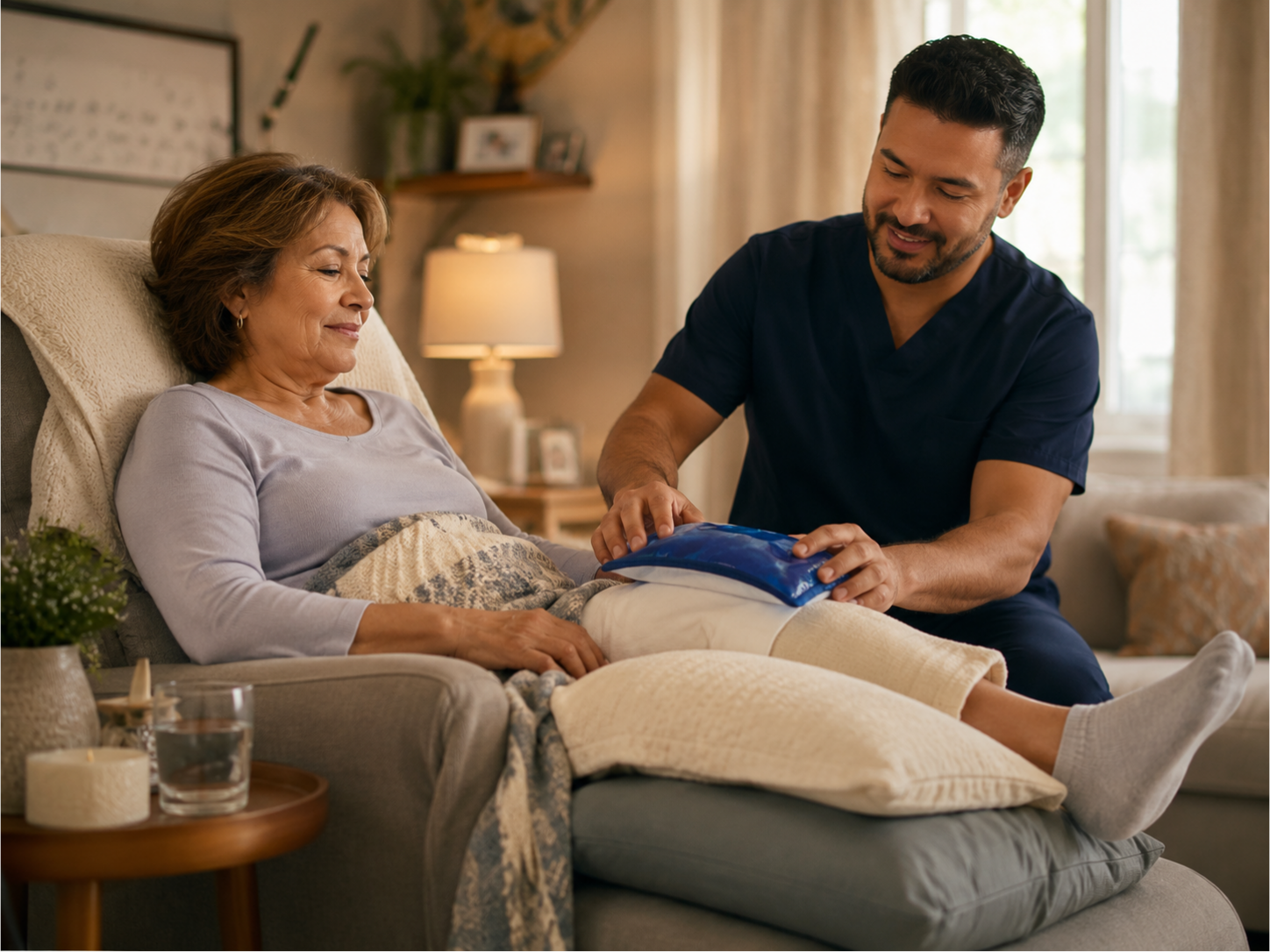
Total knee replacement is one of the most common elective surgeries for adults over 60, and one of the most demanding recovery periods for daily living. No Place Like Home Care caregivers assist with safe bed and chair transfers, morning personal care and showering adapted to the surgical site, meal preparation, and transportation to physical therapy.
Every No Place Like Home Care caregiver placed in a knee replacement home knows the stair rule: "Up with the good, down with the bad." When climbing stairs, the unoperated leg leads going up; the operated leg leads going down. This simple rule prevents the most common early post-op fall during stair navigation.
Caregivers also assist with cold therapy management, regularly refilling cryo-cuffs or placing ice packs on the knee at prescribed intervals, and with positioning the leg correctly in the CPM machine if one has been prescribed. We cannot adjust CPM settings; that is a clinical function. We can ensure the patient's leg is safely positioned and the device is stable.
Blood clot warning signs are reviewed with every caregiver before their first knee replacement shift: swelling in the calf, ankle, or foot that doesn't improve with elevation; deep calf pain or tenderness; warmth or redness on the back of the lower leg. These are escalated immediately to the family and clinical team.
Hip Replacement Recovery
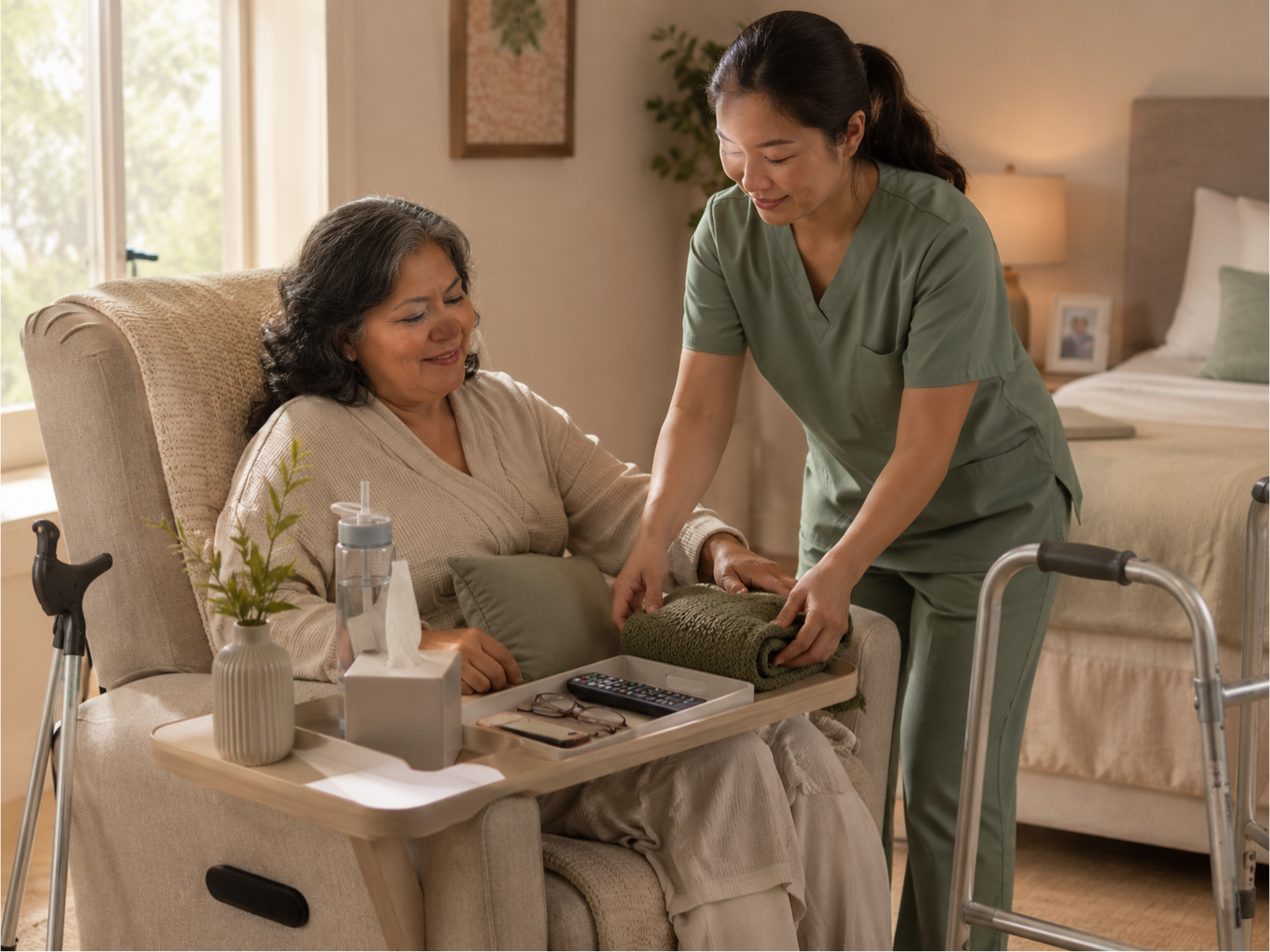
Hip replacement recovery requires strict movement precautions that every caregiver entering the home must understand before their first shift. For surgeries using the traditional posterior approach: do not bend the hip past 90 degrees, do not cross the legs or ankles, do not turn the toes inward.
Anterior approach procedures carry fewer restrictions, No Place Like Home Care's intake assessment confirms the approach before the first caregiver arrives.
A hip kit is standard equipment for this recovery: long-handled shoehorn, sock aid, dressing stick, and reacher/grabber tool, each eliminating the forward bend that risks dislocation. No Place Like Home Care's home safety assessment confirms the patient has appropriate adaptive equipment before day one.
Hip dislocation is a medical emergency. No Place Like Home Care caregivers are trained to recognize the warning signs, sudden severe hip or groin pain, inability to bear weight, the operated leg appearing shorter or forcibly rotated, and to call 911 immediately if they appear.
Showering after hip replacement requires a walk-in shower with a shower chair and handheld showerhead. No Place Like Home Care caregivers do not assist the patient over a high bathtub wall, the hip bend required exceeds the 90-degree precaution limit.
Cardiac Surgery Recovery
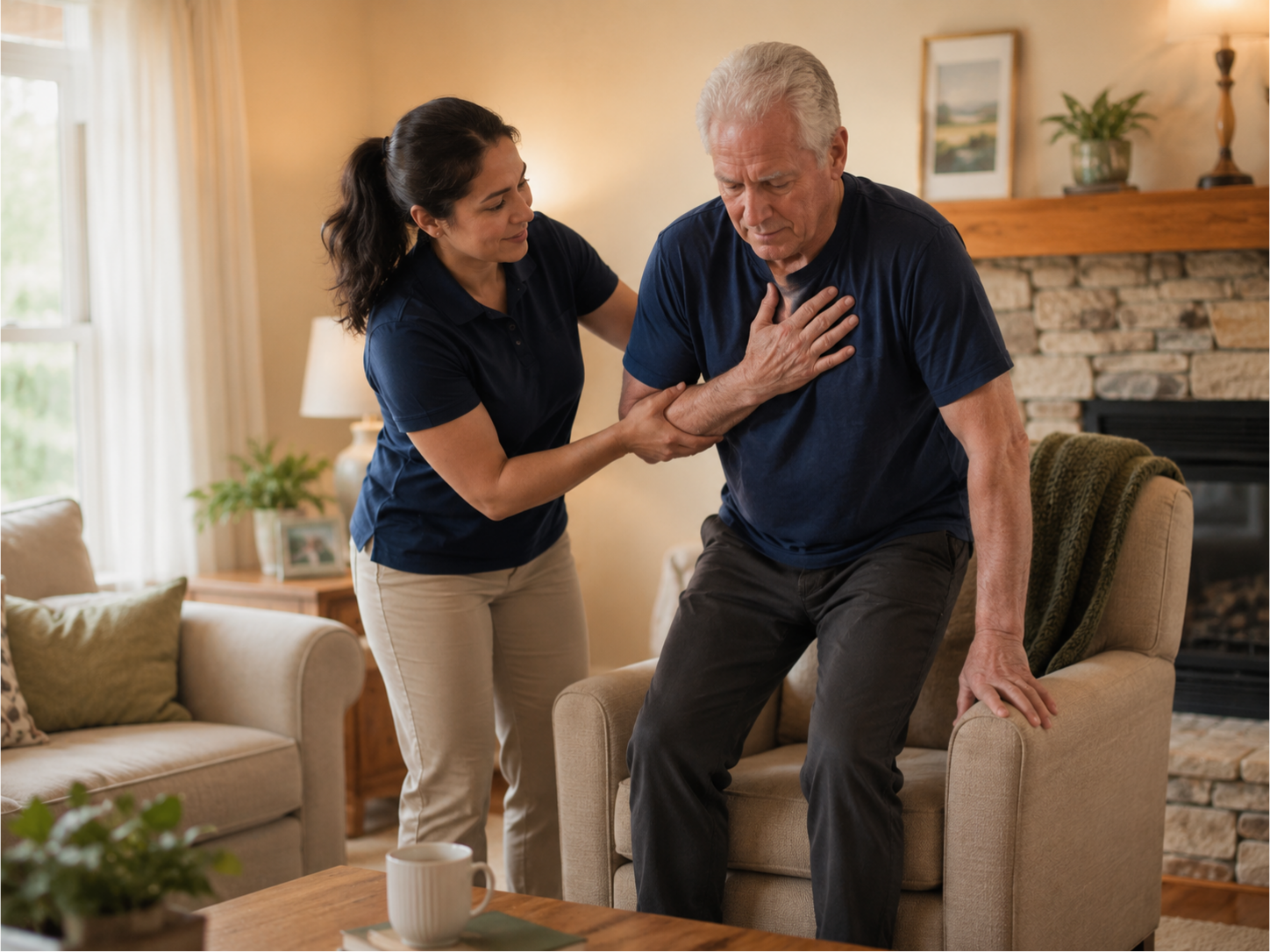
Recovery after open heart surgery, CABG, heart bypass, or heart valve replacement involves strict sternal precautions for 6 to 8 weeks: no lifting more than 5 to 10 pounds, no pushing up from chairs with the arms, no overhead arm movements, no twisting the torso. When coughing, sneezing, or laughing, the patient must hold a pillow firmly against the chest to splint the healing breastbone.
No Place Like Home Care caregivers support cardiac recovery patients in rising from chairs without arm push-up, assist with personal care within sternal restrictions, prepare low-sodium heart-healthy meals, drive to cardiac follow-up appointments, and provide daily companionship during what is often an emotionally difficult recovery period.
Post-cardiac surgery depression and emotional lability are common, not a sign of weakness. No Place Like Home Care caregivers maintain a calm, predictable daily environment and report significant mood changes to the family for clinical follow-up.
What No Place Like Home Care does NOT provide for cardiac patients: cardiac rehabilitation exercise programs, vital signs monitoring, or weight tracking interpretation. These are clinical functions.
No Place Like Home Care supports the daily living layer alongside the cardiac care team.
Stroke Recovery
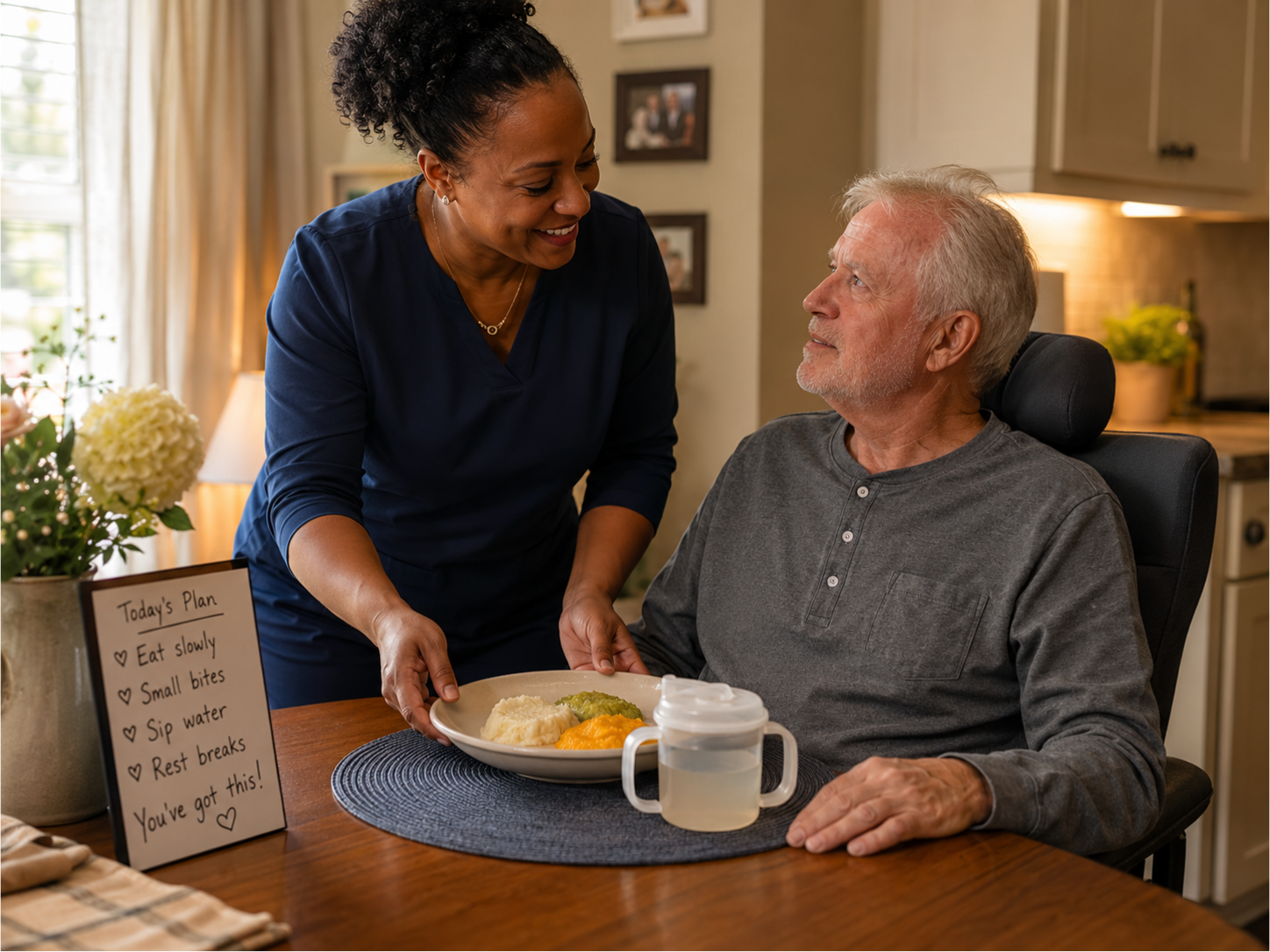
Stroke recovery at home combines neurological rehabilitation, fall prevention, communication support, and careful adaptation to new functional limitations. No Place Like Home Care's stroke recovery caregivers are trained in the specific protocols that make daily care effective and safe.
Swallowing (dysphagia): Many stroke survivors have swallowing difficulties. No Place Like Home Care caregivers follow the speech-language pathologist's exact dietary orders, using thickening agents in all liquids to the specified consistency, preparing food in the prescribed texture, ensuring the patient sits upright at 90 degrees during meals, and keeping them upright for at least 30 minutes afterward. We never modify or override the SLP's protocol.
Communication (aphasia): Aphasia is a language processing impairment, not a loss of intelligence. No Place Like Home Care caregivers speak slowly and clearly using short sentences, ask direct yes/no questions, and never rush or finish sentences for the patient. Visual aids and communication boards are used when verbal exchange is difficult.
Learned non-use prevention: When stroke survivors stop attempting to use their affected limb, defaulting to the strong side for all tasks, neurological recovery slows. No Place Like Home Care caregivers are briefed on this concept and actively encourage use of the affected side for simple daily tasks, reinforcing what the clinical therapy team is prescribing.
Second stroke recognition (BE FAST): Balance loss, Eyes affected, Face drooping, Arm drifting, Speech changes, Time to call 911. Every No Place Like Home Care caregiver in a stroke recovery home knows this acronym and is authorized to call 911 immediately if any of these signs appear.
General Surgery & Other Hospital Discharges

No Place Like Home Care's hospital-to-home recovery support is not limited to specific procedures.
We assist individuals returning home after any hospitalization, appendectomy, bowel surgery, cancer surgery, pneumonia, sepsis, diverticulitis, diabetes complications, or any other admission that leaves a person too weak or limited to safely manage daily life alone.
If your loved one was discharged with restrictions or limitations that make independent daily living unsafe, that is enough reason to call us: (610) 492-6632.
Four Questions To Ask Before
Signing The Discharge Papers
Four Questions to Ask Before Signing the Discharge Papers
Before leaving the hospital, before signing any discharge paperwork, a family caregiver should confirm these four things with the nurse or discharge planner:
1. What new diagnoses or health changes occurred during this hospital stay?
2. What specific warning signs, fever, sudden swelling, shortness of breath, changes in the incision, mean we should call the doctor or go directly to the emergency room?
3. Which medications from before the hospital stay are being stopped entirely, and which new ones are starting? Are there any dangerous interactions we should know about?
4. Who is responsible for scheduling the follow-up appointments, and within exactly what timeframe do they need to happen?
These four answers give you the foundational information needed to monitor your loved one safely at home and know when to escalate. Bring the discharge paperwork home and share it with the No Place Like Home Care team at the intake assessment, our caregivers follow the plan the clinical team has established.
If you did not receive clear answers to all four of these questions at discharge, call the primary physician's office the same day.
Preparing The Home Before Discharge Day
The Recovery Station Setup
The single most protective thing a family can do before a loved one returns home is prepare the physical environment. Most post-hospital falls happen in the first few days, and most of those falls happen because the home wasn't ready.
No Place Like Home Care's pre-discharge home preparation checklist:
Clear all walkways
Remove throw rugs, loose extension cords, and floor clutter from every path the patient will use, from the bedroom to the bathroom, from the bedroom to the main living area. These are the three highest-traffic areas in the first week home.
Set up the bathroom
Install a raised toilet seat or place a bedside commode beside the bed. Place a sturdy shower chair or transfer bench in the shower. Lay non-slip rubber mats inside and outside the shower. If grab bars are not already installed, have them anchored into the wall studs before discharge day, not suction-cup models, which fail under load.
Build a recovery station
Choose a comfortable chair in the main living area and place within arm's reach: phone charger, water, medications, TV remote, tissues, and any paperwork or discharge instructions. The goal is that the patient never has to get up for something they shouldn't have to reach for.
Stock the pantry and freezer
Before discharge day, stock easily reheatable, nutritious meals. Focus on high-protein foods that support healing, and low-sodium options for cardiac patients. Set up grocery delivery or arrange for a family member to cover immediate shopping needs.
Consider moving the bedroom to the ground floor
For patients facing hip or knee movement restrictions, open heart surgical recovery, or significant weakness, eliminating
stairs for the first one to two weeks reduces one of the highest-risk daily activities in early recovery.
No Place Like Home Care's intake assessment includes a home safety review specific to the patient's procedure and limitations. We identify hazards before the first caregiver shift, not after the first near-miss.
For Hospital Discharge Planners & Case Managers
If you are a hospital social worker, discharge planner, or case manager coordinating a patient's return home in Berks, Lehigh, Lancaster, or Montgomery County, No Place Like Home Care is the non-medical private-pay partner your patients' families are looking for.
We provide same-day discharge starts for non-medical daily living support, no referral paperwork, no physician order, no waiting period.
We are nurse-led: Kelly Tyrrell, RN oversees every placement, conducts the intake assessment, and maintains clinical supervisory contact throughout the care relationship. Your patients' families get the accountability of agency care with the responsiveness of a direct-hire arrangement.
Our caregivers are briefed on the specific procedure and discharge precautions for each patient before their first shift, hip precautions, sternal restrictions, dysphagia protocols, fall risk profiles.
We coordinate our schedule with whatever home health visits you've already arranged. No Place Like Home Care's non-medical support and the clinical home health visits work on parallel tracks.
To discuss a specific patient or establish a referral relationship, contact Kelly Tyrrell, RN directly:
Call or text us at (610) 492-6632 or email us at [email protected]
Nurse-Led Recovery Support
What That Means for Post-Hospital Families
Nurse-Led Recovery Support What That Means for Post-Hospital Families
Non-medical home care agencies typically do not have a nurse involved in the care relationship. No Place Like Home Care is different.
Kelly Tyrrell, RN, Founder & CEO, brings nearly 20 years of nursing experience specifically relevant to hospital-to-home transitions: Medical-Surgical nursing, Emergency and Trauma care, Telemetry, Acute Rehabilitation, and Home Health, including executive-level clinical management roles. She has worked both sides of the hospital discharge threshold, and she built No Place Like Home Care specifically to address what happens after discharge in the non-medical space.
What this means for post-hospital families:
The intake assessment is clinically informed. Kelly or a member of her nurse-led team reviews the discharge paperwork, evaluates the patient's specific procedure and restrictions, assesses the home environment for safety hazards, and builds a care plan around the actual discharge protocol, not a generic template.
Caregiver selection considers the clinical complexity.
A caregiver placed in a hip replacement home knows the 90-degree precaution rule and has the hip kit identified before arrival. A caregiver placed in a cardiac recovery home knows sternal precautions and the BE FAST stroke recognition protocol. This is clinical matching, not schedule matching.
Supervisory visits are real. Kelly Tyrrell, RN conducts in-person supervisory visits throughout the care relationship, evaluating caregiver performance, assessing the patient's recovery progress, and adjusting the care plan when the patient's needs change. Families are not left to manage care quality on their own.
LTCI documentation carries weight. For families activating long-term care insurance benefits to fund recovery support, Kelly Tyrrell, RN's clinical documentation supports the physician certification process your carrier requires.
How Families Pay For
Post-Hospital Home Care
A Note on Medicare First
Medicare covers short-term skilled home health care after surgery and hospitalization: visiting nurses, physical therapists, occupational therapists, and speech-language pathologists, when the patient is certified homebound and care is physician-ordered. Medicare covers these clinical services at 100%.
Medicare does NOT cover non-medical personal care, the daily bathing assistance, meal preparation, housekeeping, mobility support, and medication reminders that patients need most. Medicare never covers 24-hour continuous care or live-in caregivers at home. No Place Like Home Care fills the gap Medicare leaves.
Our recovery support is funded through:
Long-Term Care Insurance (LTCI)
Most standard LTCI policies cover in-home non-medical care during recovery. Activation typically requires physician certification of need. No Place Like Home Care accepts LTCI directly and provides the documentation your carrier needs.
VA Aid & Attendance Benefits
For eligible wartime veterans and surviving spouses, the VA Aid & Attendance pension applies directly to No Place Like Home Care's recovery support, no VA contract required.
→ See our Veterans & VA Care page
Pennsylvania Caregiver Support Program
Through your county's Area Agency on Aging, Pennsylvania's Caregiver Support Program provides sliding-scale financial reimbursement for home care and respite services.
Berks County: (610) 478-6500 · Lehigh County: (610) 782-3034 ·
Lancaster County: (717) 299-7979 · Montgomery County: (610) 278-3601
Private Pay
No Place Like Home Care accepts private pay directly. Our rates begin at $34/hour for personal care, consistent with the national median for non-medical in-home care.
Medicare Advantage (Part C)
Medicare Advantage plans must cover the same core skilled home health benefits as Original Medicare, but often require prior authorization and in-network provider selection.
Non-medical home care through No Place Like Home Care is not subject to Medicare Advantage network restrictions, it is private pay regardless of which Medicare plan the patient holds.
Recovery Support Pricing
Transparent From Day One
Recovery Support Pricing Transparent From Day One
No Place Like Home Care bills by the hour. A 4-hour minimum applies per visit. A 16-hour minimum applies per week. No long-term contracts. Hours scale down as independence returns.
HOURLY RATES
─────────────────────────────────────────────────────────
Weekday day shifts - $34/hour
Evening, night & weekend day shifts - $36/hour
Weekend evening/night & holiday shifts - $38/hour
LIVE-IN / 24-HOUR FLAT DAILY RATE
─────────────────────────────────────────────────────────
Weekday - $544/day
Weekend - $576/day
Holiday - $608/day
MINIMUMS
─────────────────────────────────────────────────────────
Per visit - 4 hours
Weekly - 16 hours
ONE-TIME FEE
─────────────────────────────────────────────────────────
Care Coordination & Onboarding - $375
(Non-refundable. Covers nurse-led intake assessment, caregiver matching, and care plan development.)
NEW CLIENT OFFER
─────────────────────────────────────────────────────────
First 4 hours complimentary after assessment and payment method on file.
─────────────────────────────────────────────────────────
Payment: Private pay and LTCI accepted. VA Aid & Attendance accepted as private pay. Medicare and Medicaid not accepted.
WHAT MEDICARE COVERS VS WHAT No Place Like Home Care COVERS
────────────────────────────────────────────────────
Medicare (skilled, clinical), at 100%:
Visiting nurse · Physical therapy · Wound care ·
Occupational therapy · Speech therapy
No Place Like Home Care (non-medical, daily living), private pay:
Bathing & dressing · Meal preparation ·
Mobility support · Medication reminders ·
Housekeeping · Transportation ·
Companionship & safety monitoring
────────────────────────────────────────────────────
Most post-hospital recovery requires both. The two services run on parallel tracks. No Place Like Home Care coordinates with your clinical home health schedule.
HOURLY RATES
───────────────────────
Weekday day shifts - $34/hour
Evening, night & weekend day shifts - $36/hour
Weekend evening/night & holiday shifts - $38/hour
LIVE-IN / 24-HOUR FLAT DAILY RATE
───────────────────────
Weekday - $544/day
Weekend - $576/day
Holiday - $608/day
MINIMUMS
───────────────────────
Per visit - 4 hours
Weekly - 16 hours
ONE-TIME FEE
───────────────────────
Care Coordination & Onboarding - $375
(Non-refundable. Covers nurse-led intake assessment, caregiver matching, and care plan development.)
NEW CLIENT OFFER
───────────────────────
First 4 hours complimentary after assessment and payment method on file.
───────────────────────
Payment: Private pay and LTCI accepted. VA Aid & Attendance accepted as private pay. Medicare and Medicaid not accepted.
WHAT MEDICARE COVERS VS WHAT No Place Like Home Care COVERS
───────────────────────
Medicare (skilled, clinical), at 100%:
Visiting nurse · Physical therapy · Wound care · Occupational therapy · Speech therapy
No Place Like Home Care (non-medical, daily living), private pay:
Bathing & dressing · Meal preparation · Mobility support · Medication reminders · Housekeeping · Transportation ·
Companionship & safety monitoring
───────────────────────
Most post-hospital recovery requires both. The two services run on parallel tracks. No Place Like Home Care coordinates with your clinical home health schedule.
How To Start Post-Hospital Home Care
With No Place Like Home Care
Here's what happens when you call:
Step 1 — The first conversation
Call or text (610) 492-6632 or email us at [email protected]. Tell us the situation: what procedure was performed, what the discharge date is, what the patient's current limitations are, and what the family can and cannot cover on their own.
No commitment. No cost. We will tell you immediately whether what you need is within our scope and what same-day availability looks like.
Step 2 — The in-home assessment
Kelly Tyrrell, RN or a member of our nurse-led team meets with you and your loved one, either at home or before the hospital discharge, to review the discharge plan, assess the home environment for safety, identify equipment needs before the first shift, and build a care plan around the specific procedure and recovery requirements.
Step 3 — Caregiver matching & care plan
We select the caregiver best suited to your loved one's specific procedure, restrictions, personality, and schedule. For hospital-to-home recovery, caregiver matching is a clinical decision, not a scheduling exercise. The same caregiver is assigned from the first shift forward.
Step 4 — Care begins
We can typically begin within 24 hours of a discharge call for families in Berks, Lehigh, Lancaster, and Montgomery Counties. For urgent discharge situations, same-day discharge notification or post-discharge emergencies, call us directly and we will prioritize.
Qualifying new clients receive their first 4 hours of care complimentary.
Call or text: (610) 492-6632
Email: [email protected]
Post-Hospital Recovery Support Throughout
Southeastern Pennsylvania
No Place Like Home Care provides hospital-to-home recovery support for individuals returning from surgery, stroke, cardiac procedures, and general hospitalization throughout Berks, Lehigh, Lancaster, and Montgomery Counties.
Lehigh County: Allentown, Bethlehem, Emmaus, Macungie, Coopersburg, Schnecksville, Slatington
Lancaster County: Lancaster, Lititz, Ephrata, Manheim, Elizabethtown, Quarryville
Montgomery County: Norristown, Blue Bell, Lansdale, Horsham, Pottstown, King of Prussia, Ambler
Not sure if your address falls within our service area?
Call us. We serve a broad region and are expanding. (610) 492-6632
The Call Most Families Delay Too Long.
The call that should happen before discharge day usually happens three days after, when the gap between the clinical care plan and daily reality has become a crisis. The family caregiver is exhausted. The patient is frustrated. The follow-up appointment was missed.
We have seen this timeline many times. The families who call early have a smoother first week home. The families who wait have a harder one.
Call or text Kelly's team at (610) 492-6632. Same-day starts available.
Qualifying families receive their first 4 hours of care complimentary.
Frequently Asked Questions About
Hospital-to-Home Recovery Care
What does non-medical home care after surgery include?
Non-medical home care after surgery from No Place Like Home Care covers the daily living support layer of recovery: bathing and personal hygiene adapted to post-operative restrictions, safe mobility and transfer assistance, meal preparation following discharge dietary guidelines, verbal medication reminders on the exact discharge schedule, light housekeeping, transportation to follow-up appointments, and companionship and safety observation throughout each shift. We do not provide wound care, physical therapy, vital signs monitoring, or medication administration, those require a licensed home health agency. No Place Like Home Care's non-medical care works alongside the clinical home health team, not instead of it.
What is the difference between home care and home health care after surgery?
Home health care is clinical medical care prescribed by a physician and delivered by licensed nurses, physical therapists, or occupational therapists, wound care, vital signs monitoring, rehabilitation exercises, and medication management. No Place Like Home Care is not a home health agency. Non-medical home care provides custodial daily living support: bathing, dressing, meals, housekeeping, mobility assistance, and companionship. Most families need both services simultaneously after a major surgery or hospital discharge. No Place Like Home Care coordinates with the clinical home health schedule, the two services run on parallel tracks.
Does Medicare pay for home care after surgery?
Medicare covers physician-ordered skilled home health care after surgery, visiting nurses, physical therapists, and occupational therapists, at 100% when the patient is certified homebound. Medicare does NOT cover non-medical personal care aides hired to cook, clean, assist with bathing, or provide daily companionship during recovery. Medicare never covers 24-hour continuous care at home. No Place Like Home Care fills this gap. Our post-surgical recovery support is private pay or long-term care insurance funded. We do not accept Medicare or Medicaid.
What are the most common risks immediately after hospital discharge?
The first 72 hours after hospital discharge carry the highest risk of complication, fall, and readmission in the entire recovery period. The three primary dangers are medication discrepancies from mixing old prescriptions with new discharge medications; accidental falls from post-hospital weakness, unfamiliar mobility equipment, and pain medication side effects; and missed follow-up appointments that allow complications to develop undetected. No Place Like Home Care addresses all three: structured verbal medication reminders on the discharge schedule, consistent mobility support and fall prevention from the moment of arrival home, and confirmed transportation to all follow-up appointments. Starting care on discharge day is the single most protective decision a family can make.
How soon can home care start after a hospital discharge?
No Place Like Home Care can begin non-medical recovery support the same day as discharge, including providing a caregiver to escort the patient home from the hospital. No physician's order is required to begin our services. Call us before the discharge date if possible so we can conduct the intake assessment, complete the home safety review, and confirm the caregiver match before your loved one arrives home. Call or text: (610) 492-6632.
What are sternal precautions after heart surgery?
Sternal precautions are strict movement restrictions designed to protect the healing breastbone for 6 to 8 weeks after open heart surgery, CABG, or heart valve replacement. The four key rules are: do not lift, push, or pull anything heavier than 5 to 10 pounds; do not raise arms overhead or reach far behind the back; do not use arms to push up from a bed or chair; and hug a pillow firmly against the chest when coughing, sneezing, or laughing to splint the bone. No Place Like Home Care caregivers are briefed on sternal precautions before their first cardiac recovery shift and assist patients in all daily activities while honoring these restrictions.
How do you climb stairs correctly after a knee replacement?
Physical therapists teach a universal stair rule after knee replacement: up with the good, down with the bad. Climbing up: lead with the unoperated leg, then bring the operated leg up to the same step. Going down: lead with the operated leg and cane or crutch, then bring the unoperated leg down to meet it. No Place Like Home Care caregivers are briefed on this protocol before any knee replacement placement and provide steady physical support during all stair navigation in the early recovery period.
What are the warning signs of a second stroke to watch for at home?
Stroke survivors face elevated risk of recurrence. No Place Like Home Care caregivers are trained to recognize and immediately act on the BE FAST warning signs: Balance loss or sudden dizziness; Eyes affected with sudden double vision or sight loss; Face drooping on one side; Arms drifting when both are raised; Speech that is slurred, strange, or absent; and Time to call 911 immediately if any of these appear. No Place Like Home Care caregivers do not treat stroke symptoms, they recognize and escalate to emergency services immediately, then contact the family.
What questions should I ask before leaving the hospital?
Before signing discharge paperwork, confirm four things with the nurse or discharge planner: one, what new diagnoses or health changes occurred during this hospital stay; two, what specific warning signs mean we should call the doctor or go to the emergency room; three, which pre-hospital medications are being stopped and which new ones are starting; and four, who is scheduling the follow-up appointments and within what timeframe. These four answers give the family and No Place Like Home Care caregiver the information needed to monitor recovery safely at home.
How do we start home care after a hospital discharge?
Call or text No Place Like Home Care at (610) 492-6632 or visit noplacelikehomepa.com. We will discuss your loved one's situation and discharge plan, confirm same-day availability if needed, and schedule an intake assessment with Kelly Tyrrell, RN or a member of our care team. We can typically begin within 24 hours of a discharge call for families in Berks, Lehigh, Lancaster, and Montgomery Counties. No physician's order is required. Qualifying new clients receive their first four hours of care complimentary.

Compassionate Care. Right Where You Belong.
Serving families throughout Southeastern Pennsylvania:
© 2026 No Place Like Home Care. | All Rights Reserved. | noplacelikehomepa.com
No Place Like Home Care is a Registered Non-Skilled Home Care Agency licensed by the Pennsylvania Department of Health under License No. HC-93843601.
To report a consumer complaint or concern, contact the PA DOH Home Health Hotline: 1-800-254-5164